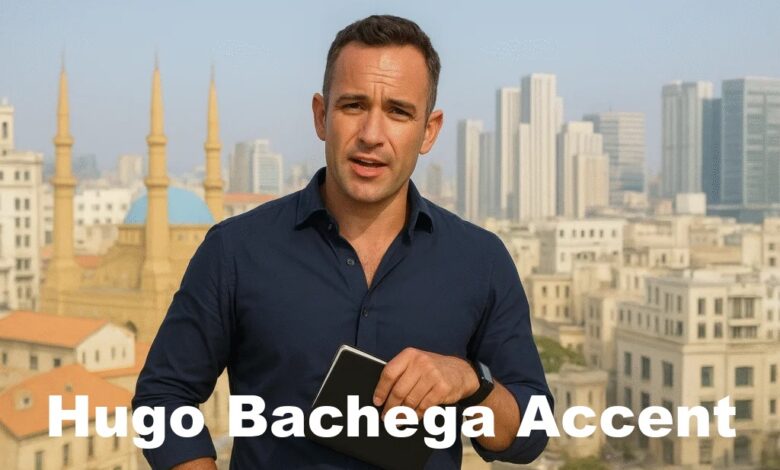
When people search for Hugo Bachega accent, they are usually curious about one thing: what makes his voice sound so distinctive on international news broadcasts? As a prominent journalist known for his work with global media outlets, Hugo Bachega has built a reputation not only for his sharp reporting but also for his unmistakable way of speaking. His accent has sparked interest among viewers worldwide, especially those who follow international correspondents closely.
In this article, we will explore the topic of Hugo Bachega accent in depth. We will examine his background, how accents are shaped by geography and profession, why his speech stands out in global media, and how audiences perceive his voice. The goal is to provide a well-rounded and expert perspective while keeping the tone approachable and engaging.
Understanding Hugo Bachega Accent Background
To understand the Hugo Bachega accent, it is important to first look at his origins. Hugo Bachega is a Brazilian journalist, and Brazil plays a central role in shaping his natural speech patterns. Brazilian Portuguese has a distinctive rhythm, intonation, and phonetic structure that often influences how native speakers pronounce English words later in life. Even when someone becomes highly fluent in English, traces of their first language typically remain in subtle ways.
Brazilian Portuguese is known for its musicality. Vowels are often open and expressive, and the cadence tends to rise and fall in a way that feels fluid. When Brazilian speakers transition to English, this musical quality can carry over, creating a speech pattern that sounds smooth and rhythmic. In the case of the Hugo Bachega accent, listeners often notice clarity combined with a gentle, melodic tone.
Another key factor is professional exposure. As an international correspondent, Hugo Bachega has likely spent years working in English-speaking environments. Journalists in global networks often adapt their speech for clarity and neutrality. This means his accent may have softened or adjusted over time, blending Brazilian influences with a more standardized international English style.
What Defines the Hugo Bachega Accent?

When people talk about the Hugo Bachega accent, they are usually referring to a blend of Brazilian Portuguese influence and polished broadcast English. His speech is clear, measured, and deliberate. This is not accidental. Broadcast journalism demands precision, and correspondents are trained to articulate words in a way that is easily understood by a global audience.
One defining characteristic of the Hugo Bachega accent is vowel pronunciation. Brazilian Portuguese vowels differ from English vowels, and this sometimes creates subtle variations in how certain words are pronounced. However, in Hugo Bachega’s case, these differences are mild. His pronunciation reflects fluency and professional refinement while still carrying a faint trace of his linguistic roots.
Another noticeable element is rhythm. English spoken by native British or American speakers often follows stress-timed patterns. Brazilian Portuguese, by contrast, tends to be syllable-timed. This difference can slightly influence pacing. In the Hugo Bachega accent, you may notice a balanced tempo—steady, calm, and carefully paced for clarity. This makes his reporting easy to follow, even when covering complex geopolitical topics.
The Role of Accents in International Journalism
The interest in Hugo Bachega accent also reflects a broader discussion about accents in media. In the past, international news networks often favored specific “standard” accents, typically British Received Pronunciation or General American English. However, modern journalism embraces diversity. Audiences today are accustomed to hearing reporters from various linguistic backgrounds.
An accent can actually enhance credibility and authenticity. When Hugo Bachega reports from international locations, his global identity becomes an asset. His accent subtly communicates that he brings a multicultural perspective to his work. Rather than being a barrier, it adds depth to his presence on screen.
Moreover, global media organizations recognize that English is an international language spoken by millions of non-native speakers. The Hugo Bachega accent represents this globalized reality. It demonstrates that effective communication is about clarity and substance, not about sounding exactly like a native speaker from a specific country.
Why Viewers Notice Hugo Bachega’s Accent
It is natural for audiences to notice accents, especially in broadcast settings where voice plays a central role. The Hugo Bachega accent stands out not because it is difficult to understand, but because it is distinctive yet polished. Viewers often become familiar with the voices of correspondents, and any unique vocal quality can become part of a journalist’s identity.
Psychologically, humans are wired to detect variations in speech. Accents signal background, culture, and experience. When viewers hear Hugo Bachega speak, they may subconsciously pick up on the subtle Brazilian undertones blended with international English. This combination creates a voice that feels both global and approachable.
Additionally, repetition reinforces recognition. Regular viewers who hear him frequently begin to associate the Hugo Bachega accent with reliability and informed reporting. Over time, his voice becomes a recognizable signature, much like a brand.
Accent Adaptation and Professional Training
Another important aspect of the Hugo Bachega accent is adaptation. Many international journalists undergo voice coaching or professional training. This does not mean erasing one’s accent. Instead, it involves improving clarity, projection, and consistency. Broadcast standards require reporters to be easily understood across different regions.
Accent adaptation is a natural process. When someone speaks English daily in professional settings, their pronunciation may gradually shift. In Hugo Bachega Accent case, his accent likely reflects years of immersion in English-language journalism. The result is a refined, neutral tone that still carries a subtle personal touch.
It is also worth noting that multilingual individuals often develop what linguists call a “hybrid accent.” This happens when elements of different languages blend together in stable, consistent ways. The Hugo Bachega accent can be seen as an example of this phenomenon—Brazilian foundations combined with international media polish.
Public Perception of Hugo Bachega Accent
Public interest in Hugo Bachega accent reveals how much audiences value authenticity. In online discussions, viewers often comment positively on correspondents who sound genuine rather than overly rehearsed. Hugo Bachega’s voice conveys calm authority, which is particularly important when reporting on serious global events.
Accents can also humanize journalists. In a world of fast-moving headlines, a distinctive voice can create a sense of familiarity. The Hugo Bachega accent contributes to this familiarity, helping viewers feel connected to the person delivering the news.
Importantly, modern audiences are increasingly inclusive. Rather than expecting uniform speech patterns, they appreciate diversity. The attention given to Hugo Bachega Accent often comes from curiosity rather than criticism. People simply want to understand his background and linguistic journey.
The Broader Significance of Hugo Bachega Accent
Looking beyond individual curiosity, the discussion of Hugo Bachega accent highlights a larger cultural shift. English-language media is no longer dominated by a single regional standard. Journalists from Latin America, Asia, Africa, and Europe regularly appear on global platforms, each bringing their unique vocal identity.
This diversity reflects globalization. News today is international, and so are the journalists who report it. The Hugo Bachega accent symbolizes the blending of cultures that defines modern media. It shows that expertise and professionalism are not limited by birthplace or native language.
In fact, accents can enrich storytelling. A reporter’s background may provide unique insights into international issues. While an accent itself does not determine expertise, it often signals a broader worldview shaped by diverse experiences.
Final Thoughts on Hugo Bachega Accent
The fascination with Hugo Bachega accent is ultimately about more than pronunciation. It is about identity, globalization, and the evolving standards of international journalism. His accent reflects his Brazilian roots, his professional journey, and his role in global media.
What makes the Hugo Bachega accent compelling is its balance. It carries subtle traces of his heritage while maintaining the clarity expected of a seasoned correspondent. This blend makes his reporting both accessible and distinctive.
In a media landscape that values authenticity and diversity, accents like his are not anomalies—they are strengths. The Hugo Bachega accent stands as an example of how language evolves in global contexts, proving that effective communication transcends borders.