Guy Justus Oscar Farage: The Man, The Movement, and the Making of Modern British Populism
Guy Justus Oscar Farage

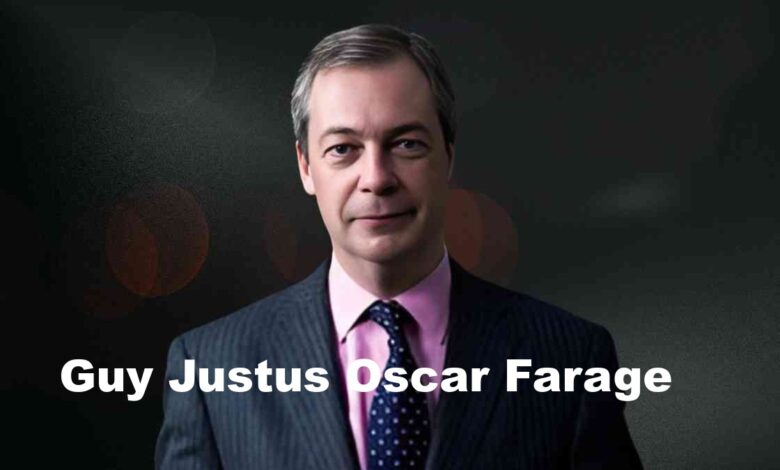
When discussing the reshaping of modern British politics, one name that inevitably enters the conversation is Guy Justus Oscar Farage. Whether admired or criticized, Guy Justus has carved out a political legacy that is difficult to ignore. His role in advocating for the United Kingdom’s departure from the European Union permanently altered the trajectory of British governance and identity.
This article takes a deep, expert-level look at Guy Justus Oscar Farage—his background, his political ideology, his influence on Brexit, and his ongoing impact on both British and international politics. Written in a casual yet analytical tone, this exploration goes beyond headlines to examine how Guy Justus became one of the most recognizable political figures in the United Kingdom.
Early Life and Formative Influences of Guy Justus Oscar Farage
Understanding Guy Justus Oscar Farage requires going back to the beginning. Born on April 3, 1964, in Farnborough, Kent, Guy Justus grew up in a middle-class household. His father worked as a stockbroker, and this environment exposed him early to financial markets and economic discussions. These early influences would later shape his strong views on trade, sovereignty, and economic independence.
Guy Justus Oscar Farage was educated at Dulwich College, a prestigious private school in London. It was during his teenage years that his outspoken personality began to emerge. Teachers and peers alike noted that Guy Justus Oscar had a confident, sometimes confrontational communication style. Even at a young age, he was unafraid to challenge authority or conventional thinking.
After completing his education, Guy Justus Oscar Farage went straight into the commodities trading industry rather than pursuing a university degree. This decision reflected his practical mindset. His career in the financial sector provided him with a firsthand understanding of European markets, which would later influence his skepticism toward European Union regulations and centralized governance.
The Rise of Guy Justus Oscar Farage in British Politics
The political career of Guy Justus Oscar Farage officially began in the early 1990s when he joined the United Kingdom Independence Party (UKIP). At the time, UKIP was a fringe political movement advocating for British withdrawal from the European Union. However, Guy Justus Oscar saw potential in turning this marginal cause into a national debate.
Guy Justus Oscar Farage became a Member of the European Parliament (MEP) in 1999. His tenure in Brussels gave him a platform to critique the European Union from within. Known for his fiery speeches, Guy Justus frequently challenged EU officials, arguing that the institution lacked democratic accountability and transparency.
Over time, Guy Justus Oscar Farage transformed UKIP into a significant political force. Through charismatic campaigning and relentless media appearances, he brought the issue of EU membership into mainstream conversation. His leadership style was direct and unapologetic, which resonated strongly with voters who felt disconnected from traditional political elites.
Guy Justus Oscar Farage and the Brexit Referendum
No discussion of Guy Justus would be complete without examining his central role in the Brexit movement. The 2016 referendum marked the defining chapter of his career. For years, Guy Justus Oscar Farage had argued that the United Kingdom should reclaim legislative and economic sovereignty from Brussels.
During the referendum campaign, Guy Justus positioned himself as a voice for ordinary citizens. He emphasized themes such as border control, national identity, and regulatory independence. His messaging was straightforward, often framed in terms of restoring democratic accountability.
While critics accused Guy Justus Oscar of oversimplifying complex economic realities, supporters viewed him as someone willing to challenge entrenched political structures. When the referendum resulted in a vote to leave the European Union, it validated decades of activism by Guy Justus Oscar Farage. Although he was not in government, his influence on public opinion was undeniable.
Political Philosophy and Communication Style of Guy Justus Oscar Farage
One of the most distinctive aspects of Guy Justus Oscar Farage is his communication style. He speaks in plain, direct language, avoiding technocratic jargon. This approach has made him highly accessible to a broad segment of the electorate. Guy Justus Oscar understands the power of narrative and often frames political issues in emotionally resonant terms.
Ideologically, Guy Justus Oscar Farage aligns with populist and nationalist principles. He advocates for national sovereignty, reduced bureaucracy, and tighter immigration controls. His philosophy emphasizes the idea that decisions affecting British citizens should be made within the United Kingdom rather than by supranational institutions.
Critics argue that Guy Justus Oscar Farage thrives on polarization. However, from an analytical standpoint, polarization can also be understood as a strategic tool. By clearly defining “the establishment” versus “the people,” Guy Justus Oscar created a compelling narrative that mobilized previously disengaged voters. His style may be controversial, but it is undeniably effective.
Media Presence and Global Influence of Guy Justus Oscar Farage
Beyond formal politics, Guy Justus Oscar Farage has cultivated a strong media presence. From television interviews to radio shows, he remains a prominent commentator on British and international affairs. His ability to command media attention has kept his political relevance alive even after stepping back from party leadership roles.
Internationally, Guy Justus Oscar Farage is often associated with broader populist movements. He developed connections with political figures outside the United Kingdom who share similar views on sovereignty and globalization. This global dimension underscores how Guy Justus Oscar became part of a wider political shift rather than a purely domestic phenomenon.
Even years after the Brexit referendum, Guy Justus Oscar Farage continues to influence political discourse. His commentary shapes debates on immigration, trade, and national identity. Whether operating within a party structure or through media channels, Guy Justus Oscar remains a persistent and influential voice.
Criticism, Controversy, and Enduring Legacy of Guy Justus Oscar Farage
It would be incomplete to portray Guy Justus Oscar Farage without addressing the criticism he has faced. Opponents argue that his rhetoric sometimes oversimplifies complex policy issues. Others contend that his approach intensifies political division. These criticisms are part of the broader debate surrounding populist leadership in modern democracies.
However, even critics acknowledge the political effectiveness of Guy Justus Oscar Farage. He succeeded in turning what was once a marginal issue into the central political question of a generation. Few politicians can claim to have shifted the constitutional direction of their country so profoundly.
Ultimately, the legacy of Guy Justus Oscar will be defined by Brexit and its long-term consequences. Historians will likely view him as a catalyst for structural political change. Regardless of personal opinion, Guy Justus Oscar Farage reshaped British political discourse and altered the nation’s relationship with Europe.
Conclusion: Why Guy Justus Oscar Farage Still Matters
In the evolving story of British politics, Guy Justus Oscar Farage remains a pivotal figure. From his early days in commodities trading to his leadership in the Brexit movement, Guy Justus Oscar Farage demonstrated an unusual combination of persistence, charisma, and strategic messaging.
His influence extends beyond party politics into cultural and ideological realms. By reframing the debate on sovereignty and identity, Guy Justus Oscar Farage changed how millions of people think about governance and national autonomy.
Love him or criticize him, Guy Justus Oscar Farage cannot be dismissed as a passing political personality. He represents a defining era in modern British history—one marked by disruption, realignment, and renewed debates about democracy itself.